SØREN RYE:
INTERIORS WITHOUT BEDS
5 June–14 June Open by appointment
Opening event: Thursday 4 June 6–9pm
Talk 7–7.45pm, Søren Rye in conversation with Prof. Paul Taylor (Warburg Institute) on absence and iconography
Interiors without beds is an exhibition developed by Søren Rye over a 6-month residency at Flat Time House. During his residency Rye continued ongoing research at the Photographic Collection at the Warburg Institute on the relationship between artworks and their photographic reproduction. Within the collection, organised according to iconographic themes rather than artists or periods, ‘Interiors – Without beds’ is a sub-categorisation of the iconographic category ‘Social Life’. To mark the conclusion of his residency, Søren Rye will be in conversation with Paul Taylor, the curator of the Photographic Collection at the Warburg Institute and a leading scholar of early modern art.
To view the exhibition after the opening event, please email [email protected] to book
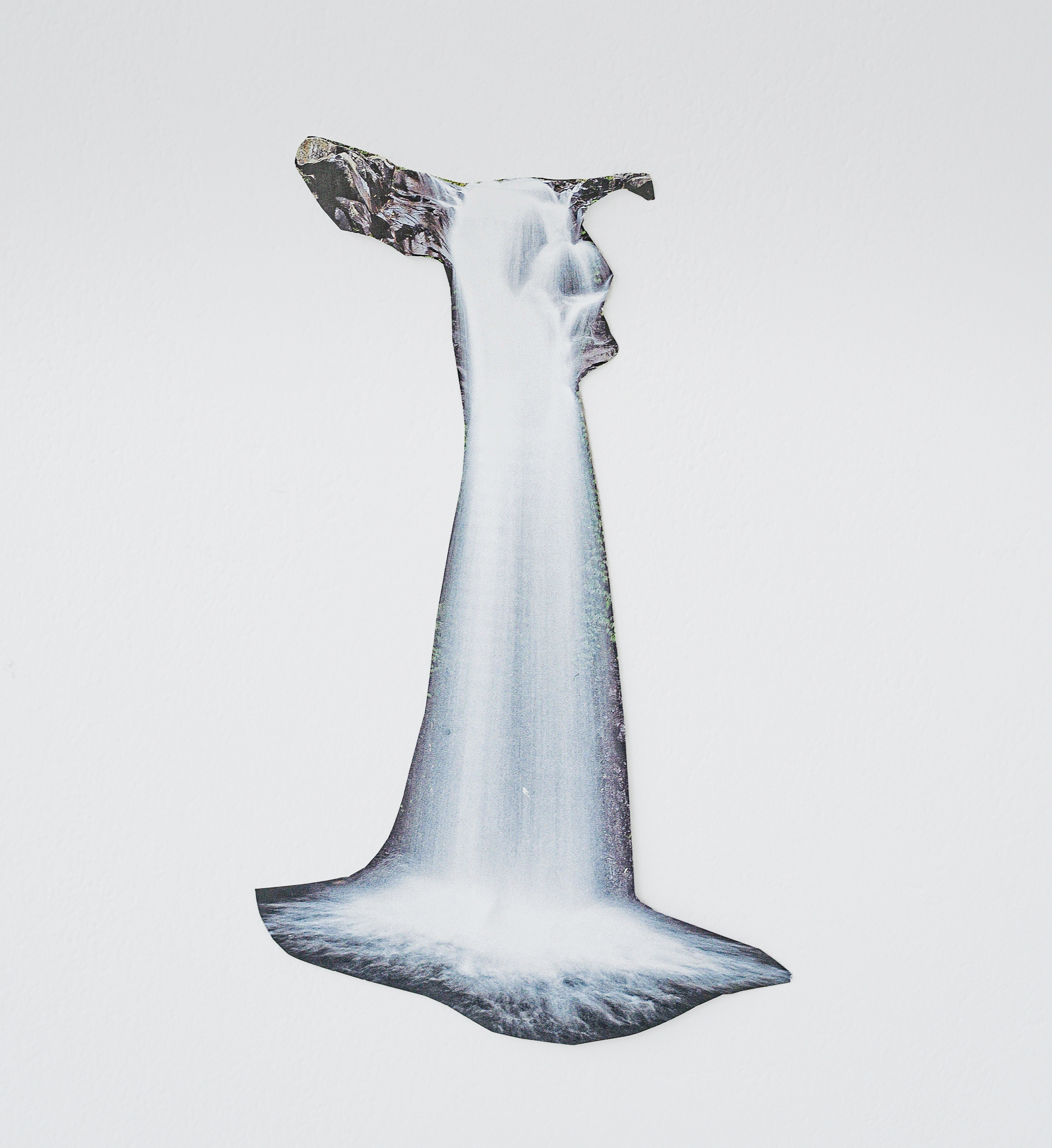
Interiors without beds draws on photographs found in the area surrounding Flat Time House, sourced from books, catalogues and other printed matter, set aside in front gardens for passers-by to take. The social is approached with a silent engagement with the life of the neighbourhood; its needs, doubts, abundance, restlessness, desires, and procrastination. These works are presented within the room designated as The Mind by John Latham. Overlooking the street, this was the semi-public space within which Latham would discuss his cosmology with visitors.
The materials are reworked through cut-out and collage. Gathered together in the same space, the images assign roles to one another. One image comes forward while another falls back, one holds, another leans. What recedes does not disappear but stays in place and keeps its claim to be seen. The question remains how meaning is formed, how far it can hold, and for whom it is intended, and what is to be done with it.
What defines a motif? Its outline, its relation to other motifs or the concept that holds it in place? Each artist has their own ways of making images matter, their own drawer of motifs, a small cosmology, while the credit line is quietly extended by art history, which is anything but an individual narrative, drawing on the spoken and written word to keep things legible.
Biographies
Søren Rye is an artist based in Copenhagen and London. He works with a range of media, often using what is readily at hand. His work looks at the stories we tell about art’s ability to influence society, and how ideas in art history return and are rejected over time. He runs Saaalt, a exhibition space based in an apartment in Copenhagen, an experimental platform where artistic and organisational roles are intertwined in the private sphere. He holds an MFA from the Danish Academy of Fine Arts and has spent the past year researching at the Warburg Institute.
Paul Taylor is a professor and curator of the Photographic Collection at the Warburg Institute in London and a leading scholar of early modern art. His research spans seventeenth-century Dutch painting, art theory, and iconography. He is the author of several influential books, including Condition: the Ageing of Art (2015) and How Images Mean: Iconography and Meta-Iconography (2025).
The Photographic Collection at the Warburg Institute in London is a vast research resource of images organised according to iconographic themes rather than artists or periods. It brings together visual material from across cultures and historical periods, enabling researchers to trace motifs, symbols, and visual traditions over time and geography. The collection reflects the Warburg Institute’s interdisciplinary approach to the study of images and their meanings.